Route Guides
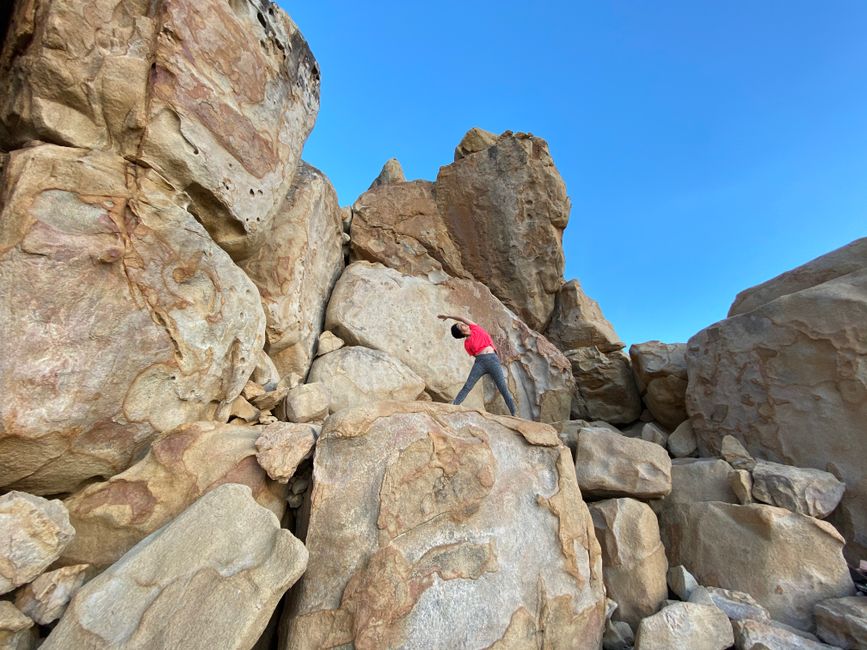
You have been climbing in the gym for months. You know the holds, you know the grades, and you feel strong. Then you drive up to the foothills, hike to a boulder, and get completely shut down by a problem that is supposedly well within your range. This happens to nearly everyone, and it is not a sign that you are weak. Outdoor climbing is a different sport in important ways, and learning to read those differences is the whole game of transitioning from plastic to rock.
The most obvious difference is the holds. Gym holds are designed to be grabbed. They are clean, positive, and usually marked with tape or color. Rock holds are whatever the stone happens to offer: sloping granite edges, tiny quartz crystals, rounded sandstone bulges, and cracks that demand a technique you may never have practiced indoors. Your gym-trained fingers are used to wrapping around something. Outdoors, you often have to press, pinch, or smear instead. That is why a strong gym climber can struggle on an outdoor problem two grades easier.
In the gym, route setters tell you where to go. Outside, you have to figure it out. Look for chalk, but do not trust it blindly, since chalk marks can be old or misleading. Look for the natural features: a change in color, a small edge, a depression that collects water, a crystal that catches light. Move your eyes along the wall and imagine the sequence before you pull on. Sometimes the obvious line is not the easiest one, and the path that looks blank from the ground turns out to have hidden feet.
Footwork outdoors rewards precision. Smearing on friction-dependent rock requires you to weight your foot gradually and trust it, which feels scary at first. Edges outdoors are often smaller and sharper than gym footholds, so place your toe deliberately rather than stomping. Practice quiet feet on easy problems and you will build the sensitivity that harder outdoor climbs demand.
Outdoor climbing is weather-dependent in a way the gym never is. Temperature, humidity, sun, and wind all change how the rock feels. Cool, dry, breezy days offer the best friction, which is why many climbers head out early in the morning. Warm and humid days make even easy problems feel greasy. Learning to check conditions and plan sessions around them is a skill that pays off immediately.
Skin management matters more outside because rock is abrasive and you cannot simply stop when your hands get raw. Bring a brush to clean holds, a file or sanding block for calluses, and tape for splits. Take breaks before your skin is destroyed, not after. And give yourself permission to be a beginner again. The first few outdoor sessions are about learning, not sending. Pick easy problems, focus on movement, and enjoy the setting. The strength you built in the gym is still there. You just have to teach it a new language, and that happens one session at a time.
